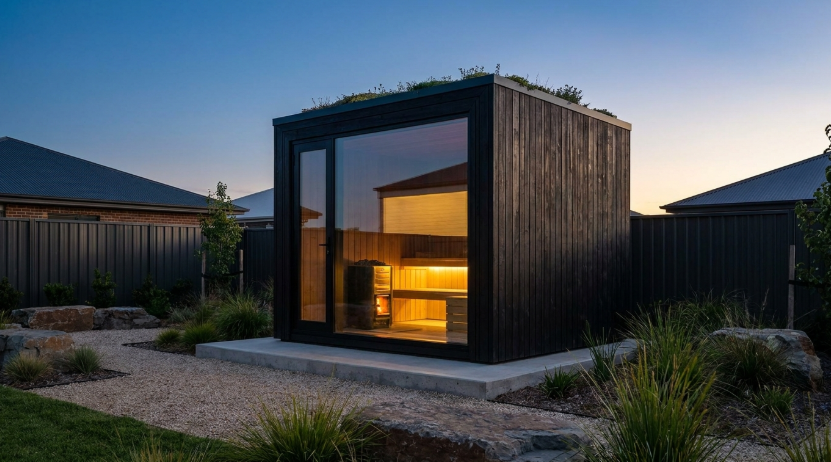
Running a cabin sauna through a cold winter typically adds $30 to $70 to a monthly electric bill for three to four weekly sessions, with heat-up times running 20 to 40 percent longer than in mild weather. The bigger cost driver isn’t the heater, it’s insulation quality: a well-insulated cabin holds temperature efficiently even at 10 degrees Fahrenheit outside, while a thin-walled one fights a losing battle against the cold all winter.
How Much Does Cold Weather Add to Heat-Up Time?
A cabin sauna heating from a 70 degree summer evening to 180 degrees inside has a much smaller gap to close than one starting from 10 or 20 degrees outside air temperature in January. In practice, that means 20 to 40 percent longer heat-up times in deep winter, so a session that took 45 minutes in September might take an hour or more once the ground freezes. Heaters sized correctly for the cabin’s cubic footage handle this fine, but an undersized heater that already struggled in mild weather becomes genuinely frustrating once winter arrives.
See also: Sleep Peptides: What the Marketing Promises, and What the Evidence Actually Says
What Does Winter Electricity Actually Cost?
For a typical 4 to 6 kW electric heater running three to four one-hour sessions a week, most owners report a $30 to $70 increase on their winter electric bill compared to a no-sauna baseline, depending on local electricity rates and how cold the season runs. Wood-fired cabins shift that cost to fuel instead, generally burning through a bit more seasoned hardwood per session as the stove works harder against colder ambient air. Either way, budgeting for a modest but real increase in monthly utility costs is more realistic than assuming winter running costs match summer ones.
How Much Should You Spend on Insulation for Cold Climates?
This is where the real cost decision sits. Manufacturers building for genuinely cold climates typically spec at least 2 inches of mineral wool insulation behind the interior wood paneling, paired with a foil vapor barrier to keep the sauna’s own humidity from reaching and degrading that insulation over repeated sessions. A cabin built to this standard costs more upfront, often several hundred dollars more than a warm-climate spec model, but pays that back over several winters in lower heating costs and faster, more consistent heat-up times. Skipping the extra insulation to save money upfront is one of the more common regrets cold-climate buyers report once their first real winter hits.
What Winter-Specific Maintenance Does a Cabin Sauna Need?
Water left in a bucket or ladle inside an unheated cabin can freeze solid overnight in freezing temperatures, so it’s worth emptying standing water after each session rather than leaving it for next time. Door gaskets can also stiffen and occasionally crack in extreme cold if the cabin sits unused for extended stretches, so a quick visual check before a session catches problems before they let heat escape. Exterior wood benefits from a fresh coat of exterior-grade sealant before the first hard freeze each year, since repeated freeze-thaw cycles are harder on unprotected wood than steady cold alone.
Does Heater Type Matter More in Cold Climates?
Wood-fired heaters have one clear advantage in a cold climate: they work during a power outage, which matters more in regions where winter storms regularly take down electrical service. Electric heaters, on the other hand, pair with a timer so the cabin is at temperature right when you walk outside, which many owners find worth the tradeoff for the convenience alone. Full specs, insulation details, and heater options for cold-climate cabin builds are listed at sweatdecks.com/collections/cabin-sauna, which is a reasonable starting point for comparing insulated versus standard models before ordering.
How Do You Prep a Cabin Sauna Before the First Freeze?
A short pre-winter checklist saves headaches once the temperature drops. Inspect the door gasket for any cracking or compression and replace it if it’s lost its seal, since a worn gasket is the single biggest source of heat loss in cold weather. Clear leaves and debris from around the base so meltwater has somewhere to drain instead of pooling against the sill. If the cabin has a vent, confirm it still opens and closes smoothly, since a stuck vent either wastes heat all winter or traps too much humidity inside. Finally, top off the sealant on any exposed exterior wood before the first hard freeze, since it’s much easier to apply in above-freezing conditions than mid-January.
Is a Cabin Sauna Worth Running Through a Full Winter?
For households that already use their cabin regularly in warmer months, winter is often when the routine matters most, since regular sauna use is associated with cardiovascular and general wellness benefits in populations that kept up consistent use across seasons, not just in summer. A well-insulated cabin with the right heater size turns a cold, dark winter evening into one of the more reliable reasons to actually go outside.
Does Snow and Ice Around the Cabin Create Extra Work?
A cleared path from the house to the cabin door matters more once the first real snowfall hits, both for safety and for keeping snow from packing against the door threshold, which can freeze into a seal that’s genuinely hard to break open. A simple gravel or paver path that drains well tends to shed snow faster than bare dirt, which turns to mud and then ice as temperatures swing above and below freezing through the season. It’s a small thing, but owners who skip it often end up chipping ice off a stuck door on the coldest night of the year, which is exactly when nobody wants to deal with it.
Frequently Asked Questions
How much more does it cost to run a cabin sauna in winter?
Expect 20 to 40 percent longer heat-up times and correspondingly higher electricity use compared to a mild-weather session, since the heater has to overcome a much larger gap between outdoor and target indoor temperature.
Do I need extra insulation for a cabin sauna in a cold climate?
Most manufacturers recommend at least 2 inches of mineral wool insulation behind the interior paneling for climates that see regular sub-freezing temperatures, along with a foil vapor barrier to stop humidity from reaching the insulation layer.
Can a cabin sauna heater freeze in winter?
The heater element itself doesn’t typically freeze, but any water left in a bucket or ladle inside an unheated cabin can freeze solid overnight, and door gaskets can stiffen and crack in extreme cold if the unit sits unused for long stretches.
Is a wood-fired or electric heater better for cold climates?
Both work in cold climates, but wood-fired heaters give you a backup heat source during a power outage, while electric heaters are easier to control precisely and pair well with a timer so the cabin is ready right when you want it.
How much does a winter electric bill go up with a cabin sauna?
For three to four sessions a week at typical residential electricity rates, most owners see a $30 to $70 increase in a winter month, depending on heater size, session length, and how cold the outdoor air is that month.
References
- Cardiovascular and Other Health Benefits of Sauna Bathing: A Review of the Evidence, Mayo Clinic Proceedings, 2018
- Effects of heat and cold on health, with special reference to Finnish sauna bathing, American Journal of Physiology, 2018
- Clinical Effects of Regular Dry Sauna Bathing: A Systematic Review, Evidence-Based Complementary and Alternative Medicine, 2018
- National Fire Protection Association, clearance and safety standards for heated structures
By Patrick Ashworth