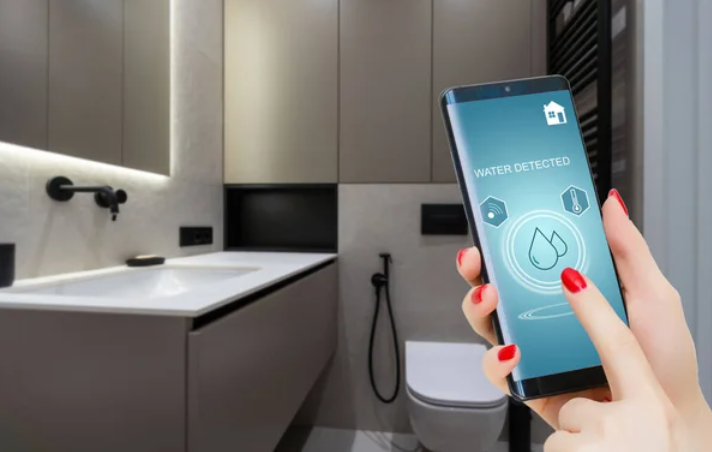
Water damage is one of the most common and costly issues that could be experienced by a homeowner. In many cases, a leak can go unnoticed for an extended period, eventually leading to severe structural damage to walls, flooring, and even the foundation of a property. Previously, these problems could only be spotted by chance or on a regular basis during manual inspections.
Nowadays, intelligent leak sensors have transformed household care and presented state-of-the-art protection against the devastating capacity of water. These devices serve as an indicator of a system to alert of an early warning to keep your investment safe and secure.
How Smart Sensors Turn Minor Leaks into Manageable Fixes
The main opportunity of the smart leak detectors is that they will alert you as soon as moisture is present where it is not supposed to be. These sensors are installed close to areas where we can expect trouble such as water heaters, under sinks, or close to the washing machines and they detect the presence of water at all times.
Upon the leakage being detected, you get an alert immediately on your smartphone, and can take immediate action. With this kind of early warning, what could have turned into serious structural damage can often be handled through a quick plumbing repair before the water spreads beyond the source. This is what prevents minor drips from developing into major catastrophes because of this prompt action.
Key Features of Smart Leak Detectors
The current leak detection technology is diverse, with various features that are intended to blend in a smart house network:
- Real-Time Alerts: Real-time notifications that are sent to your phone through Wi-Fi or cell signal assurance that you will know about a leak at home or even when you are out on vacation.
- Automatic Shut-Off Valves: Advanced will also be integrated with your main water supply line and will automatically turn-off the water when a leakage is detected.
- Humidity and Temperature Control: A large number of gadgets also monitor the humidity and temperature level, which prevents the growth of molds and frozen pipes that were broken before they got a chance.
- Simple to install: A majority of sensors run on batteries and are fully wireless and can be attached to walls or floors in regards to the potential problem areas.
Traditional vs. Smart Detection
In order to see the value proposition it is useful to contrast the old practices with the new technology:
| Feature | Traditional Detection | Smart Leak Detection |
| Response Time | Slow (Leak found only after visible damage) | Instant (Alerts sent within seconds) |
| Monitoring | Periodic (Visual checks by homeowner) | Continuous (24/7 automated monitoring) |
| Cost of Damage | High (Structural repairs, mold remediation) | Low (Minimal drying needed, quick fix) |
| Protection When Away | None (High risk during vacations) | Full (Remote alerts and control) |
When you invest in this technology, it is not only about preventing water, but also the life of your home. Precautions to avoid water damage thus the rot and mold that can follow which may cost you inestimably to remove. You protect your equity by ensuring that the plumbing system in your house is locked with intelligent technology.
It is a preventive kind of maintenance that will not leave you facing financial surprises and keeps your budget more predictable. The money saved from avoiding major water damage can instead be redirected toward planned upgrades or affordable house refurbishments that improve your living environment without the shock of unexpected repair expenses.
See also: Modern Painting Technologies: Advanced Tools and Techniques Now Available to Medina Homeowners
FAQs
Are smart leak detectors connected to Wi-Fi?
Though the majority of smart leak detectors are connected to Wi-Fi to notify you on your smartphone, most of them have local alarms such as sirens or flashing lights that will trigger in the event of internet disconnection.
Which is the most appropriate point to put a leak detector in my house?
Areas where water is used or where pipes are kept should be taken priority. Usually, hot spots are under the kitchen and bathroom sinks, the water heater, the washing machine, and the dishwasher.
Is a smart leak detector able to automatically turn off my water?
Normal sensors detect and give warnings about water. Nevertheless, there exist hi-tech systems with a smart water shut-off valve.
What is the frequency of replacement of batteries in a smart leak detector?
This is based on the particular model and application but the majority of the smart leak detectors make use of long life batteries which last between 1 to 2 years.