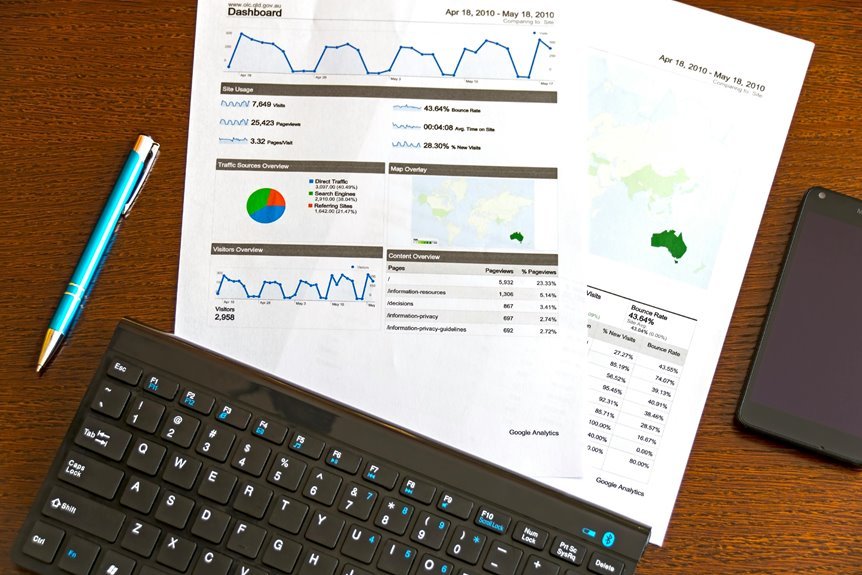
The Business Performance Dashboard, associated with codes 965272954, 3605157440, 917715748, 640100183, 944041404, and 602636798, serves as a pivotal instrument in modern organizational management. It distills complex data into visual formats, enhancing clarity and decision-making speed. By promoting a culture of informed independence, organizations can adapt more effectively to dynamic market conditions. However, the question remains: what specific strategies can maximize the utility of such dashboards for sustained business growth?
Key Features of Business Performance Dashboards
Business performance dashboards serve as vital tools for organizations aiming to monitor and enhance their operational efficiency.
Key features include data visualization capabilities that transform complex datasets into understandable graphics, facilitating quick decision-making.
Additionally, the integration of real-time analytics empowers users to track performance metrics instantly, enabling agile responses to emerging trends and issues, thus fostering a culture of informed independence.
Benefits of Implementing Dashboards for Performance Monitoring
Implementing dashboards for performance monitoring offers numerous advantages that enhance organizational effectiveness.
Through effective data visualization, stakeholders can swiftly grasp complex information, facilitating informed decision making. This clarity allows teams to identify trends and areas for improvement, ultimately driving strategic initiatives.
Best Practices for Utilizing Performance Dashboards
Effective utilization of performance dashboards requires a strategic approach to ensure they deliver maximum value.
Prioritizing data visualization enhances comprehension, while fostering user engagement leads to actionable insights.
Tailoring dashboards to specific user needs increases relevance, promoting informed decision-making.
Regularly updating metrics and encouraging feedback further optimizes performance dashboards, cultivating an environment where data-driven strategies can thrive and support organizational goals.
Case Studies: Success Stories With Business Performance Dashboards
Success with performance dashboards can be illustrated through various case studies that highlight their transformative impact on organizations.
These dashboards enhance user engagement by providing intuitive data visualization, enabling stakeholders to quickly grasp key metrics.
For instance, companies that adopted performance dashboards reported increased decision-making speed and improved operational efficiency, ultimately fostering an environment where data-driven insights propel strategic growth and innovation.
Conclusion
In conclusion, the Business Performance Dashboard serves as a vital instrument for organizations striving for operational excellence. By harnessing the power of data visualization, these dashboards enable swift decision-making and foster a culture of informed independence. As the adage goes, “What gets measured gets managed.” By implementing best practices and learning from success stories, organizations can optimize their performance monitoring strategies, ensuring they remain agile and responsive to emerging trends and opportunities for growth.